Introduction
When you carry a firearm under a License to Carry (LTC), few topics raise as many questions — and misconceptions — as gun-free zones and the legal use of a firearm for self-defense in those areas. Understanding how state and federal laws interact can help responsible carriers stay lawful while protecting themselves and others.
What Is a Gun-Free Zone?
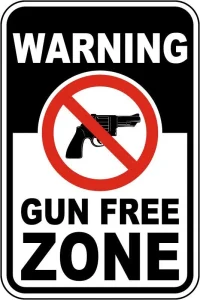
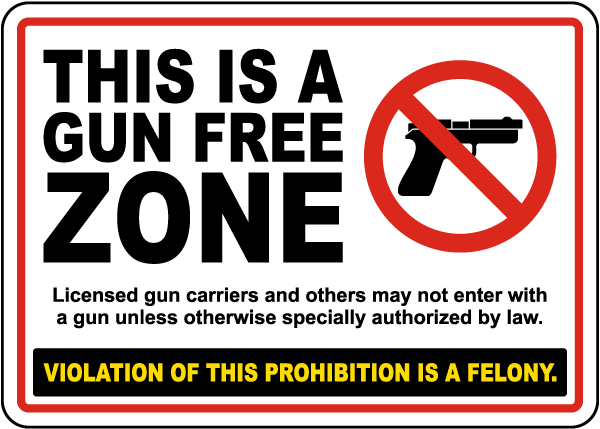
A gun-free zone (GFZ) is a location where the law prohibits carrying a firearm, even for those with a license.
There are two primary categories:
1. Federal Gun-Free Zones
Under federal law (18 U.S.C. § 922(q)), it is generally unlawful to possess a firearm:
-
Within 1,000 feet of a school or school property (K-12)
-
On school grounds or within school buildings
-
At school-sponsored events
Exceptions exist — including for certain employees and individuals with permissions — but for most LTC holders, carrying in these zones is prohibited unless you qualify under an exception.
2. State and Local Gun-Free Zones
Individual states, including Texas, may designate additional gun-free areas. In Texas, these may include:
-
Polling places on election days
-
Secure areas at airports
-
Courtrooms
-
Some governmental meetings
-
Premises posted with legally compliant signage (e.g., “30.06” / “30.07” signs under Texas Penal Code)
-
Private property where the owner prohibits firearms
It is critically important to recognize that private property restrictions can be legally enforceable, and violating them may lead to criminal charges even with a valid LTC.
Gun-Free Zone Signage in Texas
-
In Texas, property owners may post signs forbidding firearms. The relevant rules include:
-
“30.06” signs: Concealed handgun prohibition
-
“30.07” signs: Open carry prohibition
-
Both must meet strict formatting and placement requirements
If signage meets legal requirements, law enforcement may arrest you for carrying in violation of that sign — even with an LTC.
-
What Happens If You Carry in a Gun-Free Zone?
Criminal Penalties
Violating federal or state gun-free zone laws can lead to:
-
State misdemeanors
-
Federal felony charges (especially in school zones)
-
Fines and jail time
-
Confiscation of the firearm
Consequences can be severe even if you never draw or use your firearm.
Using a Firearm for Self-Defense in a Gun-Free Zone
This is one of the most legally complex areas for carry license holders.
1. The Law Does Not Say “No Defense Allowed”
Even in a gun-free zone, a person may still claim self-defense under applicable state law if they reasonably believe deadly force is necessary to prevent imminent harm (e.g., in Texas under Penal Code § 9.31–9.32).
In theory, self-defense rights exist everywhere — but the legal consequences of using a firearm where you are prohibited from carrying can be significant.
2. Criminal vs. Civil Consequences
If you use a firearm in self-defense in a gun-free zone:
-
You may still face criminal prosecution for carrying in that zone.
-
You may face civil liability for injuries or deaths resulting from the incident.
-
Prosecutors and courts may review whether your presence and your decision to carry violated laws — even if the self-defense claim is valid.
3. Reasonableness Standard
A self-defense claim generally requires that:
-
You reasonably believed that force was immediately necessary, and
-
The force used was proportionate to the threat.
Legal outcomes are fact-specific; the presence of a gun-free zone restriction is one of many factors courts may consider.
Practical Considerations for LTC Holders
Know Where You Can and Cannot Legally Carry
Study federal, state, and local restrictions. Ignorance of the law is not typically a legal defense.
Respect Private Property Rights
Owners may prohibit firearms, and violating those rules can result in criminal trespass charges separate from firearm laws.
Understand the Risk of Using a Firearm
Even a justified self-defense shooting can have major legal and civil ramifications. A gun-free zone restriction does not automatically negate a self-defense claim, but it does not protect you from prosecution for the underlying carry violation.
Training Matters
Self-defense decisions happen in seconds. Advanced training in:
-
Threat assessment
-
De-escalation skills
-
Use-of-force law
-
Scenario planning
can dramatically improve outcomes and legal defensibility.
Summary: Carry Wisely, Act Lawfully
| Scenario | Legal Status | Self-Defense Claim Possible? |
|---|---|---|
| Carrying in a lawful area with LTC | Legal | Yes, if justified |
| Carrying in a gun-free zone | Illegal | Self-defense claim may still be presented, but underlying violation remains |
| Use of firearm in self-defense in gun-free zone | May be justified | You could still face charges for unlawful carry |
Final Thoughts
Gun-free zones are real legal restrictions that must be respected. Self-defense rights exist everywhere, but using a firearm in a place you shouldn’t have been carrying exposes you to added legal scrutiny and potential penalties.
The best defense is avoiding unlawful carry in the first place — and making informed, lawful decisions if force becomes necessary.
At new.redzoneltc.com/, our mission is to provide practical education, legal clarity, and real-world readiness — because responsible protection begins with informed decisions. Our comprehensive training programs are designed to equip you with the knowledge, skills, and mindset necessary to handle your firearm responsibly and confidently. Whether you’re seeking basic safety knowledge or advanced tactical training, we are committed to your safety and success.
If you’re ready to learn more about Texas License to Carry training or want guidance on getting started, we’re here to help.